


Why website performance is a management decision?
WUD Estonia 2026 sponsor Zone's view on this year's conference topics.
How design and performance shape strategy in the context of WUD Estonia 2026
Design has long outgrown the role of visual finishing, and today it directly shapes strategy, guides long-term decisions, and supports sustainable digital growth. In a digital-focused organisation, design decisions are closely linked to technological foundations, software development and business outcomes.
To explore these connections in practice, WUD – the largest conference in the Baltics for managers, product developers, and design professionals will take place from 16 to 20 February in Tallinn. For the 17th time, the event brings together people whose daily work involves complex decisions, product development, and business.
The theme of this year's conference is where design shapes strategy. The focus is on real stories, practical methods, and measurable results that show the role of design in supporting strategic choices, innovation, and long-term growth.
Zone Media, the sponsor of WUD Estonia 2026, is one of Estonia's longest-standing digital infrastructure providers. For more than 25 years, Zone has supported organisations in creating reliable and sustainable digital services – from domain registration and web hosting to software foundations that directly affect the speed, performance, and scalability of development.
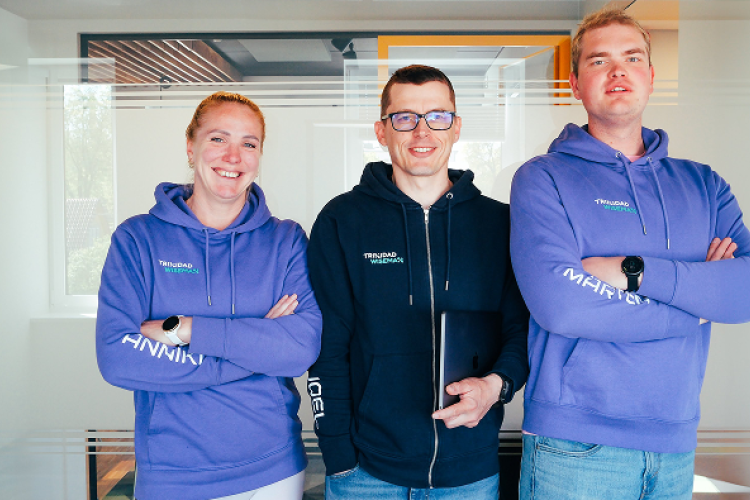
In this interview, we talk to the Zone team about why they support the WUD Estonia 2026 conference and how website performance relates to strategic design and software development decisions. We also discuss why performance is a management decision, not just a technical detail, and what should be considered when creating digital products that stand the test of time.
In Zone, you will come across thousands of websites on a daily basis. Why is website performance still a major challenge even in mature organisations?
It's a snowball effect. Technologies are developing very quickly, and requirements are growing along with them. The faster technologies develop, the faster expectations increase, and this in turn forces technology to change even faster.
The web, which was modern five years ago, is often outdated today. Security requirements, usability, and people's expectations have changed.
Often, cosmetic changes are not enough. It is necessary to update the business logic and software foundation. A good example is mobile. If you support multiple devices and display types, resource requirements increase throughout the system.
Mobile view decisions also have a direct impact on the desktop web view. Each additional device or screen type does not affect only one view, but increases the complexity and resource needs of the entire system at once.
The same applies to the server side. Not every new solution can simply be built on top of an old one. In software development, decisions must already be made at the foundation level, determining whether the system can evolve over time or whether development will slow down.
Where do performance problems usually start?
Mostly with business decisions. The business side is not always up to date with technology. If nothing changes visually but development happens in the background, it can feel like a standstill.
Keeping existing functionality running may seem boring, but it often takes more resources than developing something new. In software development, this is a critical point where performance issues start to build up gradually.
Design decisions that shape results
Which design decision will have the biggest impact on website performance in the long run?
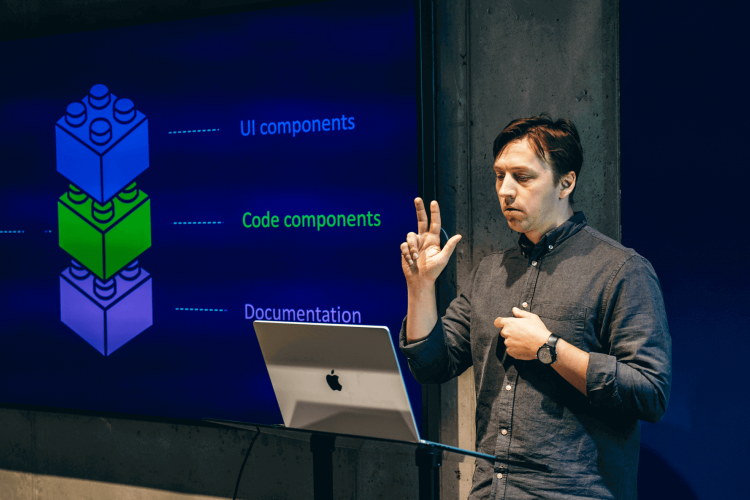
This is not a classic design decision, but rather how the design is implemented in software. Design must be implemented in a way that allows it to be changed quickly when needed, and so that problems caused by design errors can be solved.
User expectations are shaped not only by your own design, but also to a large extent by habits formed through using other services. A new popular service in a completely different field can change users' habits and expectations very quickly. If the software implementation does not allow changes, both performance and user experience will suffer.
Designers don't always have a good overview of infrastructure and hosting. What do you think they need to better understand about the impact of their decisions on what happens to the service later?
Designers do not have to think about infrastructure on their own, but design cannot be created separately from it. This does not mean working in isolation, but rather the need to connect design decisions early with the development and infrastructure team.
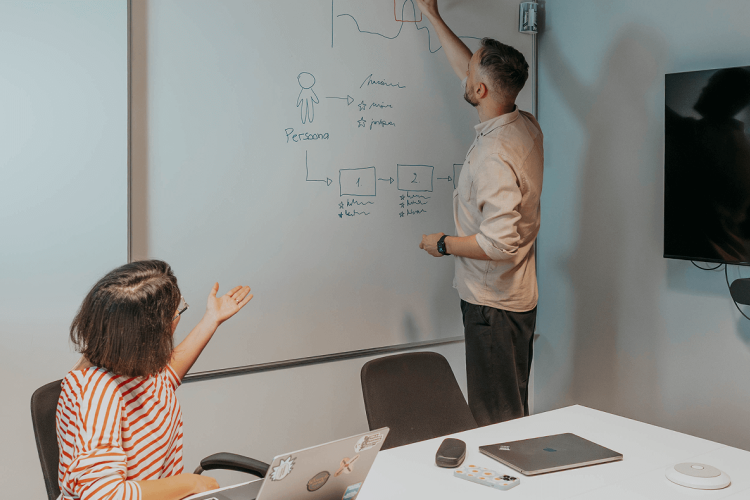
Design development must go hand in hand with development and infrastructure, so that it is possible to notice early where small changes can have a big impact later on.
For example, sales or advertising pages may require different security requirements or server-side optimisation options than the rest of the service. If you decide early in the design process which parts of the page are static, it can speed up website loading many times more than later software optimisations such as caching.
Performance as a strategic management issue
Why are hosting, domains, and security long-term strategic choices?
Often, these decisions are made at the beginning of the project and delegated to the technical level, but their impact goes far beyond what initially appears.
The speed of managing a website or application is not only related to server performance and is not limited to infrastructure costs. Performance is not just about server speed. It affects user experience, developer experience (DX), and how quickly issues can be identified and resolved.
When the web is down, it matters whether information is available again in 10 minutes, how the issue is communicated, and how quickly the cause is found.
In practice, it can also happen that the problem is reported to the wrong partner, and only then does it become clear that the service is not located where it was expected. In software development, access, responsibilities, knowing where the system is located, and clarity about who to contact in case of infrastructure-level problems all matter.
What performance trade-off tends to be underestimated for the sake of rapid growth and new features?
There is no single answer to this question, as speed, new features, and rapid growth can all have their advantages.
However, a negative experience spreads faster than a positive one. If something doesn't work or is slow during rapid growth, people do not just leave quietly.
The problem is raised publicly, for example on social media, and it stays there longer than the technical failure itself. A technical problem may be relatively easy to solve, but repairing reputational damage is no longer just a technical on/off issue.
Cooperation and responsibility
What does effective collaboration between designers, developers, and infrastructure partners look like when performance is taken seriously?
The effectiveness of cooperation depends primarily on people, not just processes or tools. The first check is very simple. Look at the list of participants in the first meeting. Are all the necessary roles and areas represented?
What usually changes in an organisation when performance is a shared responsibility and not an afterthought?
If performance-related topics are addressed early and collaboratively, the initial planning may seem longer and more boring.
Later, however, a common language develops, and both designers and the business side know how to take performance and technical limitations into account when making decisions. As a result, necessary changes move faster, creating positive momentum and strengthening team spirit.
Looking to the future and about the WUD Estonia 2026 conference
As accessibility, artificial intelligence, and sustainability become increasingly important, how do you think expectations for website performance will change?
With the rise of artificial intelligence, it must be recognised that this is an evolving environment. Development is moving so fast that today's opinion may no longer be valid tomorrow.
The most important thing is to build in-house AI competence, stay informed, and then trust that expertise.
Why did Zone Media decide to support the WUD Estonia 2026 conference and how does the topic where design shapes strategy fit into your daily work?
WUD is an annual tradition for our team.
In addition to the sponsor team, our developers and UI and user experience designers will also be there to keep up with changes. Presentations, communication with others, and evening exchanges of opinions help keep the team's knowledge at a level that supports coping in today's environment.
Conclusion
If there was only one thing designers and product managers could remember about a website's performance, what would it be?
„After the product is ready, the real work begins.“
If you are interested in how design influences decisions, strategy, and digital services that truly work, then WUD is the place to explore these topics in a calm and meaningful way and find some real answers. Learn more at wud.ee, and see you at WUD.